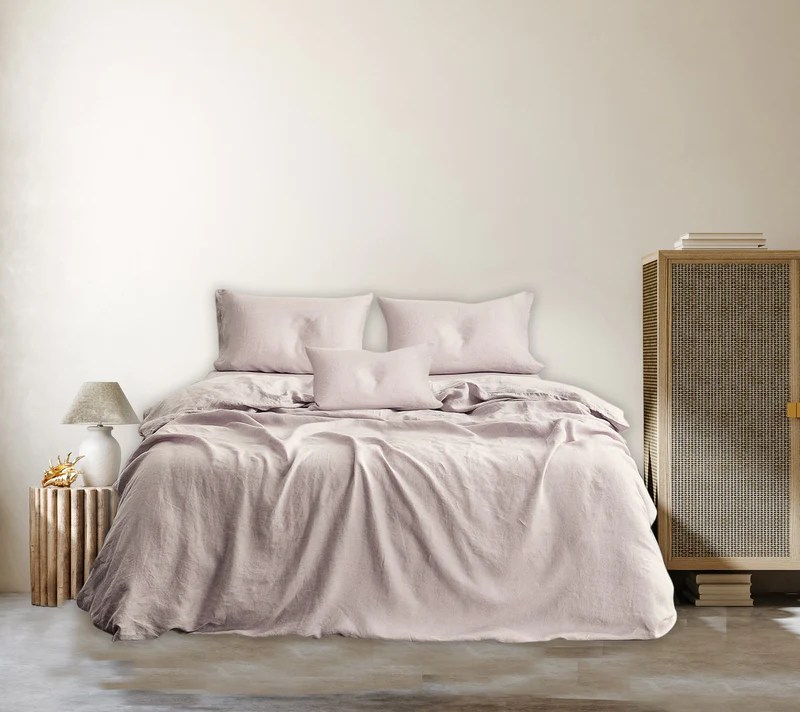
Being environmentally friendly to the planet is the first thing that comes to mind when caring for yourself and your surroundings. Of course, there are now many eco-friendly and sustainable options, but knowing where to start can always take time and effort. Riseandfall of Cotton can direct you in the right direction toward becoming more environmentally friendly. You can start by making small changes, like switching your bedding to linen, a more viable option, in your bedroom.
Of course, elegance is the first thing everyone thinks of when discussing linen bedding from Riseandfall of Cotton. You may improve your life and quality of sleep by selecting linen bed sheets, duvets, pillowcases, and bedding sets with their wonderful feel. The great quality of linen bedding, such as its longevity, tends to make people like it. The longevity of the linen bedding sets may help you be gentler to the environment because they are made from an eco-friendly flax plant.
How does your bedding give you pleasant sleep?
Bedding made of linen is soft. Although it is not as smooth as cotton, this is not a significant disadvantage. After each wash, linen becomes even more peaceful and pleasant. A few examinations show that resting on such sheets has a delicate back rub impact that forestalls untimely maturing of the skin. Unlike other textiles, it has a stunningly natural and expensive appearance. Linen is the only material that works well in almost any room, giving it a versatile look. Regarding comfort and appearance, linen bedding is unrivaled in your bedroom. Pastel fabrics give your house an exclusive feel that only some of the most expensive prints can match.
Is the bedding set possible for regular use?
The most environmentally responsible decision is this one. But why, in contrast to other fabrics, is linen so resilient? The flax plant, used to make linen, is planted at the beginning of sustainability. The flax plant yields linen. The flax plant is found along the Netherlands, Belgium, and France coast. The flax plant doesn’t require much water. Moreover, unlike a cotton plant, it does not require additional water. Additionally, herbicides are neither necessary for nor liked by the flax plant. The first two explanations for why linen is so resilient are those. Although it is a sturdy natural product, linen has to be handled carefully. The maximum temperature for washing should be between 30 and 40 degrees Celsius using a light detergent. Dry it outside on a clothesline or at a low temperature in the dryer. Both drying and washing use less energy.
How cotton bedding is comfortable?
The fundamental truth to be told to individuals is great for the climate. But we can also see that choosing sustainable bedding is right for those who work in the industry and those who use the bedding in question. This is also looking at how choosing sustainable bedding affects the environment. Picking Fair-exchange cotton bedding made with natural filaments implies that you can sit back and relax, realizing that people were not hurt on ranches or in production lines. You’ll know that employees were treated fairly and received a fair wage. Naturally, this also aids in the fight against social injustice and contributes to a more just and improved world.
Is linen bedding beneficial for the environment?
Frequently, the production of textiles uses a lot of water, produces a lot of greenhouse gas emissions, and uses chemicals that are bad for the environment. Compared to many other types of cloth, it may be more environmentally friendly for the following reasons: The flax plants from which linen is made are often grown in Europe since they require less water. There is a lot of rain here, so rinsing the land with additional water is usually unnecessary. If the linen has been produced and farmed in Europe, there will be fewer transportation emissions when purchasing linen bedding than most other materials. This is sometimes untrue because flax is frequently spun in China, yet linen bedding is fully made in Europe.
Is linen bedding is water efficient?
We are glad that the word linen has been shortened because it comes from the Latin word for flax. Because of this, linen is a more environmentally friendly fabric for clothing because its production process uses less water overall. Also, cloth texture only needs a little water to wash and keep up with different textures, like cotton or silk. Because it is strong and long-lasting, it lasts longer than many other fabrics. Linen is a sustainable material used to make clothing and other textile products because it can last for decades if properly cared for. Linen bed sets likewise have a characteristic protection from messes and microbes, which implies that they needn’t bother with being washed as frequently as different textures, lessening the general water utilization and environmental effect of its utilization. It’s cool to believe that a similar plant in your piece of clothing has likewise delivered the oil in certain individuals’ kitchens. The flax plant’s total use increases its sustainability.
 City Hunt Business