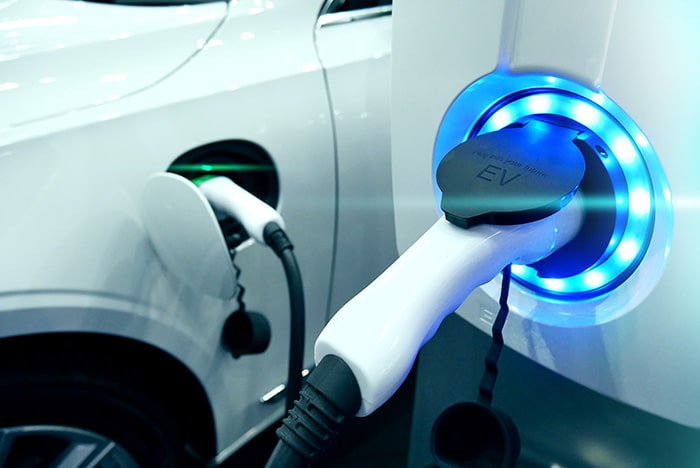
Renewable energy has peaks and valleys, such as when it is windy or very sunny. Then more energy arrives than we require at the time. The batteries in electric vehicles are ideal for storing this energy. We may store the sustainably generated energy in this manner for periods when there is less created. On a windless night, you may also use sun and wind energy in this manner.
EVs assist to minimize air pollution since they do not emit CO2 or greenhouse gases when driving. This improves air quality, particularly in and around cities. Electric motors are also far more efficient than internal combustion engines. As a result, driving an electric automobile requires less energy, requiring less fossil fuel. This impact is amplified if the electric vehicle is charged with energy derived from renewable sources such as water, wind, or solar energy. Because of all of these characteristics, electric vehicles have a good influence on the environment.
WHAT DETERMINES THE ENERGY CONSUMPTION OF AN EV?
Several elements influence an electric vehicle’s efficiency. When we talk about efficiency, we are referring to a vehicle’s range (or range). In other words, the distance a battery-powered vehicle can travel on a single full charge, similar to the distance a fuel-powered vehicle can travel on a full tank of diesel or gasoline.
The range of an EV is determined by a variety of factors, including the vehicle’s weight, tyre type, aerodynamics, and battery pack size. A heavier electric vehicle, by definition, consumes more energy than a lighter, smaller EV. A smaller automobile, on the other hand, generally contains smaller battery packs. At the same time, energy density, or the ratio of a battery’s capacity to its size, is improving. The energy density is growing as a result of new approaches, and it will become even more beneficial in the next years.
WHAT ARE THE DIFFERENT KINDS OF EVS?
Battery electric vehicles (BEVs) run entirely on electricity and use rechargeable batteries. BEVs, often known as ‘plug-in’ EVs, are powered by an external electrical charging outlet. They run on electricity and do not have a gasoline engine, fuel tank, or emissions.
Plug-in hybrid electric vehicles (PHEVs), also known as extended-range electric cars, are fueled in part by gasoline and in part by electricity. They feature externally charged batteries and regenerative braking capabilities. A gas engine is also used in PHEVs to increase the vehicle’s range and replenish the automobile battery.
They differ from PHEVs in that they only charge the battery via regenerative braking. When driving, these EVs use their electric motor, which is supplemented with the gasoline engine when needed owing to changes in load or speed.
CONCLUSION
According to the calculations above, an EV charging stations manufacturers in India is definitely more sustainable than a car that operates on fossil fuels. Not immediately, but generally within a year after rolling off the production line. Furthermore, sustainable technology will only develop in the next years, making EVs even more environmentally friendly. Because of the development in solar and wind energy, electricity generation is getting more environmentally friendly year after year. An EV purchased today is currently more environmentally friendly than a gasoline vehicle, but in 10 years it will be considerably more so.
 City Hunt Business